
What is battery energy storage?
Battery Energy Storage Systems (BESS) are utility-scale rechargeable batteries that use chemicals to store and release energy on demand. Lithium-ion is the most common battery chemistry used to store electricity in Australia.
When there is surplus energy in the grid, batteries will recharge from the grid using energy produced by other sources such as wind and solar power. When there is insufficient energy in the grid, batteries will release electricity to supply the grid.
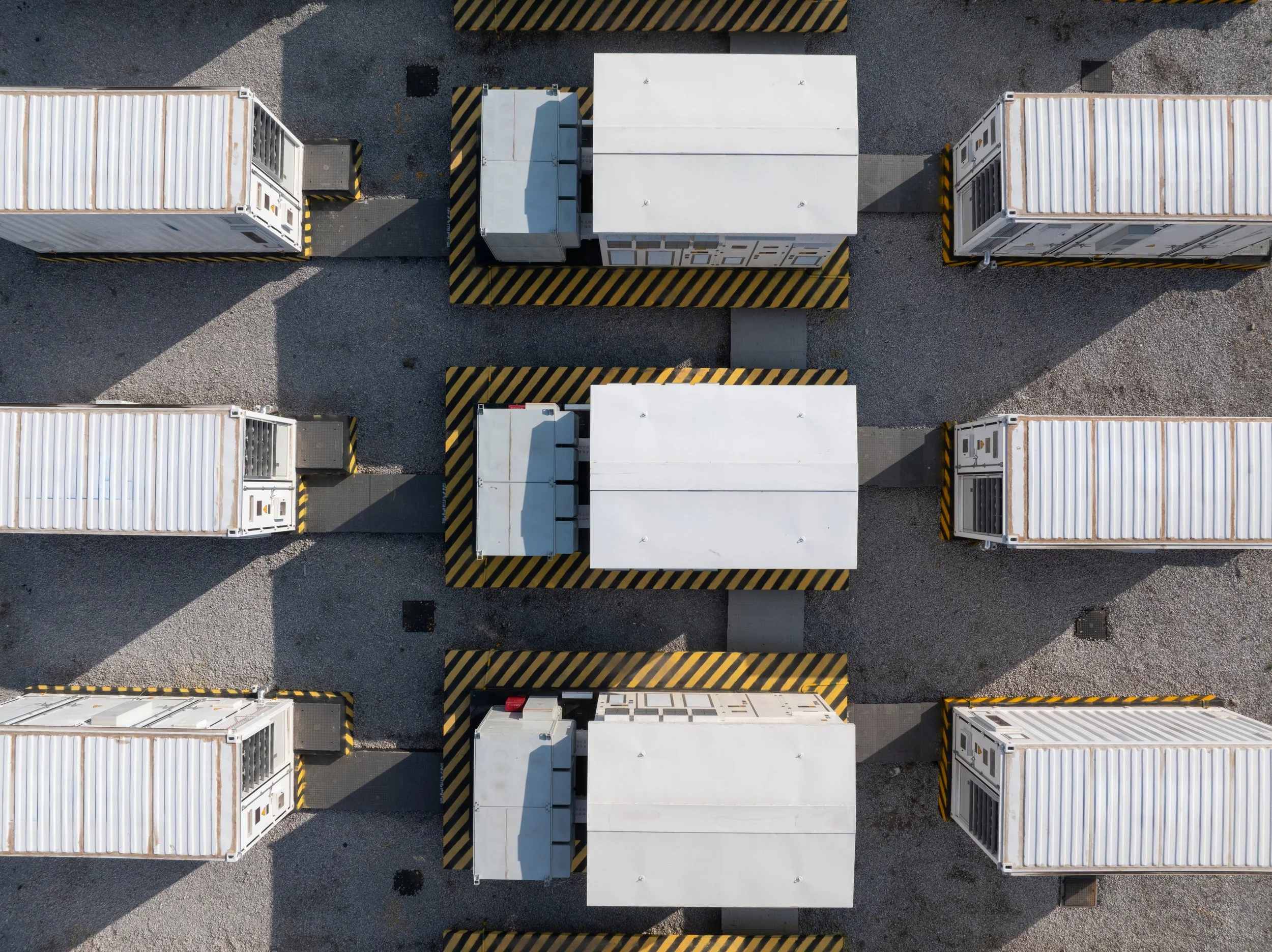
What do they look like?
A battery energy storage system typically contains groups of battery modules housed in containers or enclosures. These modules are connected to power conversion and control equipment. BESS facilities are modular and can be configured based on specific site and capacity requirements.
How tall are they?
Typically, battery units are housed in groups of shipping containers that are approximately 3-3.5m high. The switchgear buildings and the main transformers are around 6m and 7m high respectively.